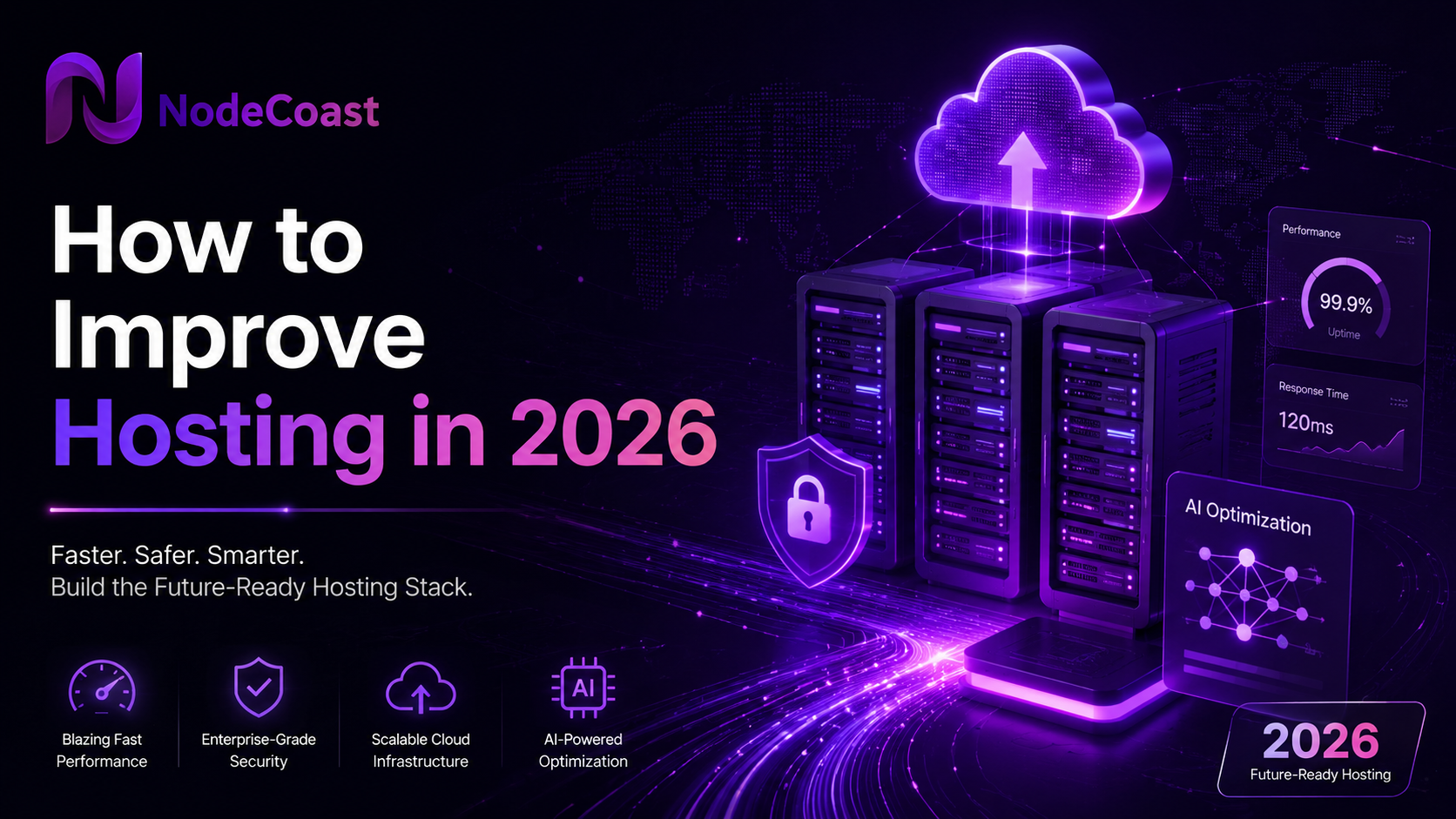
How to Improve Hosting in 2026
Web hosting used to be a background decision, something you picked once, forgot about and rarely reconsidered. That mindset no longer holds up. In 2026, hosting infrastructure directly shapes how fast your site loads, how well it ranks, how secure your data is, and ultimately, how much revenue your business generates online.
If your hosting setup hasn’t been reviewed in the last year or two, chances are it’s quietly holding your business back. Here’s what actually moves the needle this year.
1. Move Away from Oversold Shared Hosting
The cheapest hosting plans are cheap for a reason: your website shares limited server resources with hundreds, sometimes thousands of other accounts. When traffic spikes on any of those sites, yours slows down too, regardless of how well-built it is.
In 2026, businesses serious about growth are shifting toward hosting environments with isolated, guaranteed resources where your website’s performance depends on your traffic, not your neighbor’s.
2. Prioritize NVMe Storage Over Traditional SSDs
Storage speed has a direct, measurable impact on how fast your database queries and page loads perform. NVMe drives are significantly faster than standard SSDs, and the gap matters more than ever as websites grow richer in content, images and dynamic functionality.
If your current hosting still runs on older SSD or HDD infrastructure, this alone could be costing you meaningful load-time improvements.
3. Use Resource Management Systems, Not Just “Unlimited” Promises
“Unlimited resources” is one of the most misleading phrases in hosting. In reality, every server has limits, the question is whether those limits are managed intelligently or left to chance.
Modern hosting environments use resource management layers (like CloudLinux) to guarantee each account its own dedicated CPU, RAM and I/O allocation, so one account’s traffic spike can never silently degrade another’s performance. This is the difference between a hosting promise and a hosting guarantee.
4. Treat Security as Infrastructure, Not an Add-On
Security threats evolve constantly, and in 2026, basic firewall protection isn’t enough. Proper hosting security now means real-time malware scanning, automated threat detection and proactive server hardening built into the hosting layer itself, not bolted on as an afterthought.
A hosting provider that treats security as a core feature, rather than a premium upsell, protects both your website and your customers’ trust.
5. Demand Real Backup Systems, Not Just “Backups Available”
Many hosting providers advertise backups without clarifying how often they run, where they’re stored or how quickly they can actually be restored. A backup you can’t reliably recover from isn’t a safety net, it’s a false sense of security.
In 2026, businesses should expect automated, frequent backups stored securely, with a clear, tested recovery process, so a technical issue never turns into a business crisis.
6. Choose a Stack Built for Speed, Not Just “Web Server Software”
The web server technology behind your hosting matters more than most business owners realize. Modern, high-performance web server stacks are built specifically to handle dynamic content and high traffic faster than traditional configurations, directly translating into quicker page loads and a smoother visitor experience.
Hosting Is Infrastructure, Not a Commodity
The businesses that treat hosting as a strategic investment, not a recurring bill to minimize, are the ones building websites that stay fast, secure and reliable as they scale. In 2026, the gap between “cheap hosting” and “professional hosting” has never been more visible in the numbers that matter: load time, uptime, rankings and conversions.
How NodeCoast Solves This
Our Premium Cloud Hosting is built around exactly these principles: NVMe storage, CloudLinux resource isolation, proactive security monitoring and a genuine automated backup system, all running on enterprise-grade infrastructure engineered for performance, not just uptime badges. It’s hosting built the way businesses actually need it in 2026: fast, secure and dependable by design.
Curious whether your current hosting is keeping up? Get in touch with our team for a clear, no-pressure look at where your infrastructure stands, and what upgrading could mean for your business.